Salt Lake City and nearby Salt Lake County cities
Water damage restoration in Salt Lake City
Burst pipe, flooded basement, sewer backup, smoke or mold? Call and you are connected with an independent restoration contractor that takes jobs in the Salt Lake Valley.
This is a referral line, not a contractor. You talk to the company directly and decide whether to book.
Why the first days matter
Water keeps moving after the leak stops
Once water is on the floor, it doesn't stay there. It wicks up drywall, spreads under flooring and sinks into carpet pad. The EPA advises drying water-damaged areas within 24 to 48 hours to prevent mold growth (EPA guide).
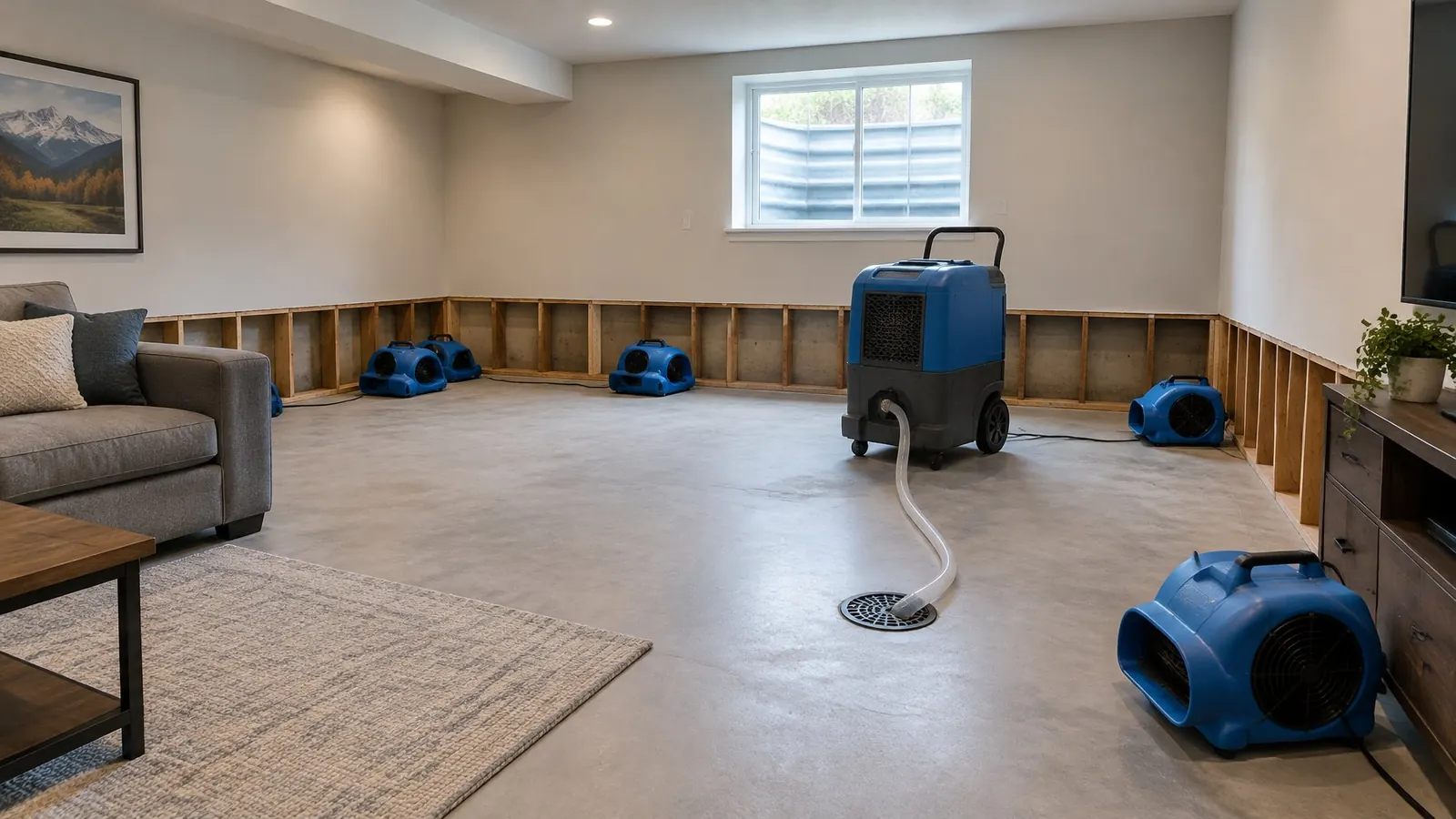
Restoration is the work of getting it all back out: extraction, drying with air movers and dehumidifiers, then replacing what couldn't be saved. A contractor measures moisture each day so you know when the job is really finished.
Services
Damage the calls cover
- Water Damage RestorationExtraction, drying to measured readings, then the rebuild of whatever had to come out.Read more
- Water Extraction & DryingStanding water out, then air movers and dehumidifiers until the readings say dry.Read more
- Frozen & Burst PipesA split line in a cold wall or crawlspace, often found only when it thaws.Read more
- Flooded Basement CleanupWater across a finished or unfinished basement floor, from inside or outside the house.Read more
- Sewage Backup CleanupWastewater from a floor drain, toilet or tub: treated as contaminated from the start.Read more
- Storm & Roof Leak DamageRain, snowmelt or ice finding a way through the roof, a window well or a door.Read more
- Appliance & Water Heater LeaksWater heaters, washer hoses, dishwashers, ice makers and AC drain lines.Read more
- Fire & Smoke DamageSoot, smoke odor and the water used to put the fire out.Read more
- Mold RemediationGrowth after a leak or a damp basement, removed at the source.Read more
Salt Lake City, population 218,428
Basements, cold snaps and spring runoff
Salt Lake City has an estimated 218,428 residents (Census 2025), and plenty of its homes have basements holding the water heater, the washer and a finished room or two. That's where many water calls start.
Weather plays its part. The city's emergency management office describes spring runoff as typically lasting from April to July, as creeks swell with snowmelt (city page). In October 2025, about two and a half inches of rain in 14 hours caused localized flooding in Rose Park (city incident page).
City facts
Four things Salt Lake City residents should know
Sewage backup or main break
Salt Lake City Public Utilities' 24-hour dispatch: 801-483-6700.
Source: Public Utilities
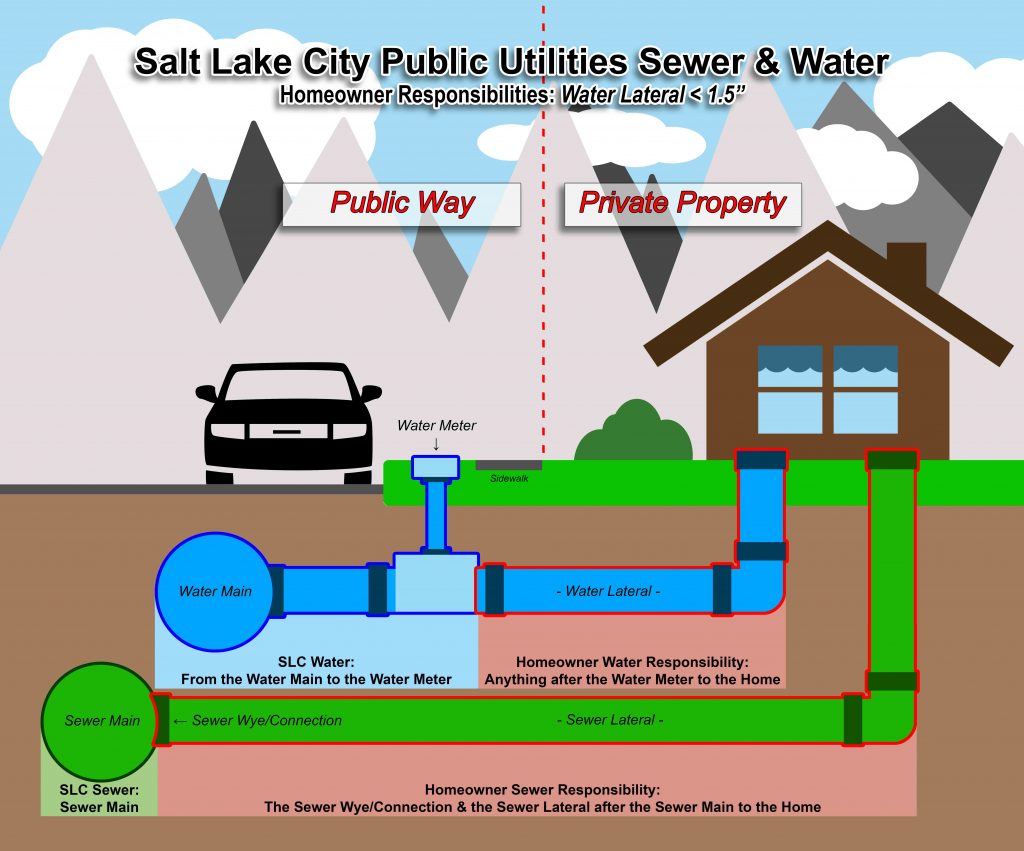
Past the meter is yours
The city's graphic puts the water line from the meter to the house, and the sewer lateral from the main to the house, with the homeowner.
Source: responsibility graphic
Emergency repair permits
Urgent work can start first; the permit is then obtained as soon as practical, generally the next day.
Source: Building Services FAQ
Flood cover takes time
Homeowner policies don't cover flooding, and a flood policy typically takes up to 30 days to start.
Source: Emergency Management
What kind of water
Clean, gray and black water
Restoration contractors sort water by contamination, because it decides what can be dried and what has to go.
Clean water
From a supply line, a water heater or a sink overflow caught quickly. Most materials can usually be dried in place.
Gray water
From a washer or dishwasher drain, or clean water that has sat for a while. Some porous items may be discarded.
Black water
Sewage, or water that came in from outside over soil. Porous materials it reaches are normally removed and the area is disinfected.
How the call works
From the phone call to a dry room
You call the number
Lines go to independent restoration companies taking jobs in Salt Lake City and nearby cities.
You describe the damage
Where the water came from, which rooms, how long it has been wet and whether it is sewage.
The contractor explains the next step
Usually a visit to look at the damage and take moisture readings.
You decide
Pricing, scheduling and any contract are between you and the contractor. You are under no obligation.
Nearby
Calls from these cities too
Each page lists who supplies water and sewer there and where permits are issued.
South Salt LakeCity water and sewer for most homes, with some addresses on other providers. MillcreekMt. Olympus sewer, three possible water suppliers and a city building department.
 MurrayMurray City runs its own water and wastewater, with one emergency number.
 Cottonwood HeightsCottonwood Improvement District sewer; water from Jordan Valley or Salt Lake City.
 West Valley CityWater and sewer from improvement districts, mostly Granger-Hunter.ZIP 84119, 84120, 84128
Questions
Before you call
Who answers when I call?
An independent restoration company that takes jobs in the Salt Lake Valley. This site is a referral service; it doesn't send anyone itself.
Is there any obligation?
No. The call is a conversation. Pricing, scheduling and whether to hire are between you and the contractor.
How much will restoration cost?
It depends on how much water, the type of water, how long it sat, which materials got wet and what has to be rebuilt. The contractor prices the job after seeing it; this site doesn't quote prices.
Do you cover cities outside Salt Lake City?
Calls are taken from Salt Lake City and nearby cities including South Salt Lake, Millcreek, Murray, Cottonwood Heights, West Valley City.
Should I call my insurer first?
Stop the water and make the home safe first. The Utah Insurance Department advises contacting your insurer or agent as soon as possible and not having permanent repairs made until the insurer has inspected.
Salt Lake Valley
Talk the damage through with a local restoration contractor
A single call reaches an independent contractor that handles water, smoke and mold jobs in Salt Lake City and the surrounding cities. You decide whether to book anything.
Water where it shouldn't be?
The call goes to an independent restoration contractor that takes jobs in the Salt Lake Valley. Describe the source, the rooms involved and when it started.
Call (801) 823-6866Calls may be recorded for quality and billing. How the line is paid: referral disclosure. What is recorded: privacy.